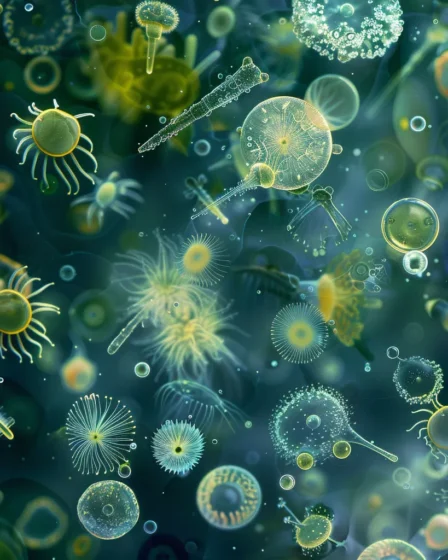
Are you curious about the tiny creatures that power our oceans and lakes? Plankton might be small, but play a huge role in aquatic ecosystems. In this blog, we’ll break down the types of plankton, including phytoplankton and zooplankton, explore their different sizes, and discover their various habitats. You’ll learn how they support food webs, …
Biology
Symbiosis: Types and Examples in the Natural World
Have you ever heard of animals helping each other in the wild? It’s not just a Disney movie; it’s called symbiosis. Symbiotic relationships surround us, from the tiniest bacteria to the largest mammals. These relationships can benefit both parties involved, or one might benefit while the other remains unaffected. In some cases, one species might …
Food Chain Breakdown: Producers, Consumers, and Decomposers
Understanding how the food chain works is like learning about nature’s menu. It’s a way to see what’s for dinner in the animal world and how everyone gets their energy. When you get the hang of it, you’ll notice how all living things rely on each other, like pieces of a giant puzzle. Producers, consumers, …
Cyanobacteria: Insights into Photosinthetic Blue-Green Algae
Cyanobacteria, commonly known as blue-green algae, are fascinating bacteria that harness photosynthesis to produce energy. This blog will teach you about their unique characteristics, structure, and photosynthetic capabilities. We’ll explore the different types of cyanobacteria, from unicellular to filamentous forms, and their roles in aquatic and terrestrial environments. Additionally, we’ll discuss the ecological impacts of …
Antibiotics: What Are They and How Do They Work?
Antibiotics are essential medicines used to treat infections caused by bacteria. By either killing bacteria or stopping their reproduction, antibiotics help the body overcome infections. Antibiotics, introduced to medicine in the 20th century, have significantly reduced deaths from diseases like tuberculosis and pneumonia. However, they are ineffective against common cold or flu viruses. Therefore, we …
Fungi Study Guide: Study Yeasts, Molds, Lichens, Symbiosis and Mycorrhizae
Fungi, a unique group of living organisms separate from plants and animals, include forms like yeasts, molds, and mushrooms. They are vital and indispensable in breaking down dead material, making nutrients available in the environment, and forming beneficial partnerships with plants. For instance, mycorrhiza enhances plant root absorption of water and nutrients. This introduction will …
Homeostasis Explained: Balancing Body Temperature and Hormones
Homeostasis is an important biological principle that ensures stable internal conditions regardless of external changes. This process, essential for health and survival, involves complex interactions between hormones, osmoregulation, and acid-base balance. By regulating body temperature and blood glucose levels, homeostasis supports bodily functions and equilibrium. Understanding how homeostasis works offers insights into the human body’s …
Biodiversity and Ecology – Pillars of Life on Earth
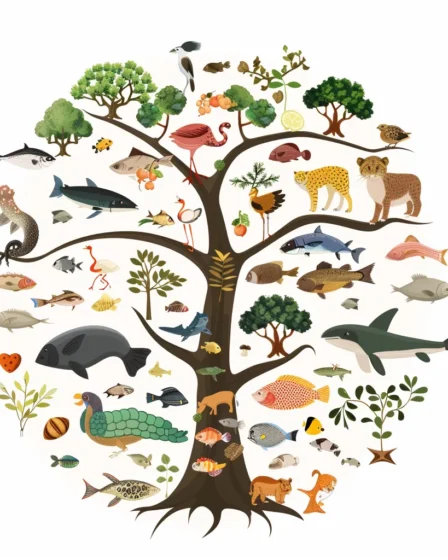
Have you ever considered the wide variety of life on our planet, from microscopic bacteria to towering trees, and how these diverse forms sustain ecosystems? The answer lies within the study of biodiversity and ecology. Biodiversity is not just a catalog of life but a critical framework for understanding how living things interact within ecosystems …
Mitosis and Meiosis: Key Processes in Cellular Division and Genetics
Have you ever wondered how a single cell develops into a complex organism or how our bodies replace billions of cells daily? The secret lies in cell division. Cell division is a fundamental biological process for life as we know it. It enables organisms to grow, repair damaged structures, and reproduce. Two main types of …
Isotonic and Hypertonic Solutions: What They Are and How They Affect Cells
Isotonic and Hypertonic Solutions: What They Are and How They Affect Cells Have you ever considered what keeps our cells happy and healthy? Our journey through isotonic and hypertonic solutions reveals just that. Isotonic and hypertonic solutions are super important in how cells live and thrive. An isotonic solution is like a cell’s comfort zone, …