Resources & News about Tutoring and Education.

Showing: 31 - 40 of 100 RESULTS
metallic-bonds-electron-sea
Chemistry

Metallic Bonds: How Metals Bond and Their Properties

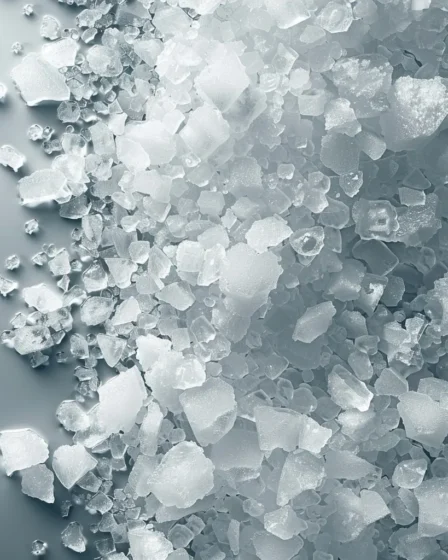
Metallic bonds form when free electrons move through a lattice of positively charged metal ions. This electron movement explains key properties of metals, such as their ability to conduct electricity and resist breaking under stress. Metals are widely used due to their durability, conductivity, and malleability—all of which result from the strong metallic bonds between …

reversible-reactions-between-exothermic-and-endothermic-front
Chemistry

Exothermic and Endothermic Reactions: Energy in Chemical Reactions

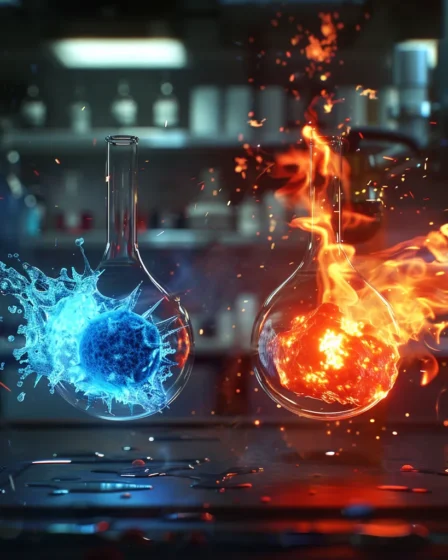
In every chemical reaction, energy is absorbed or released, affecting the surrounding temperature. Exothermic reactions release heat, making the surroundings warmer, while endothermic reactions absorb heat, cooling the environment. The reaction type depends on whether energy is released or absorbed during bond formation and breaking. This process is seen in everyday phenomena like combustion, photosynthesis, …

states-of-matter-including-solid-liquid-gas-and-plasma
Chemistry

States of Matter: Solid, Liquid, Gas, and Plasma

Matter exists in different forms based on particle arrangement and energy levels. The four classical states of matter—solid, liquid, gas, and plasma—are part of our daily experiences. Solids retain shape and volume, liquids flow but maintain volume, gases spread to fill space, and plasma is charged and highly energetic. Each state has distinct properties that …

noble-gases-colorless-odorless-inert
Chemistry

Essentials of Noble Gases: From Science to Everyday Use

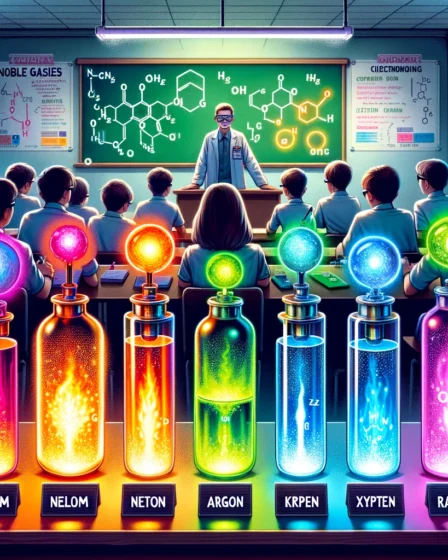
Noble gases, sometimes called inert gases, hold a unique place in the periodic table. These gases, including helium (He), neon (Ne), argon (Ar), krypton (Kr), xenon (Xe), and radon (Rn), are known for their lack of color, odor, and taste. Noble gases are nonflammable, making them incredibly stable under standard conditions. Historically, noble gases were …